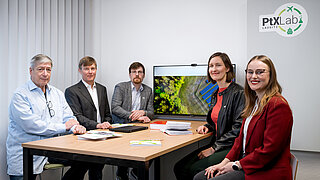
New explanatory film shows ways to defossilise the chemical industry
Copyright: PtX Lab Lausitz / Jojomoto
A new film by PtX Lab Lausitz shows how the chemical industry can successfully transition away from fossil carbon and what measures are needed now.
The chemical industry is facing a fundamental question: how can its products be manufactured without fossil carbon in the future? This is precisely where the new explanatory film from PtX Lab Lausitz comes in.
In around 2:30 minutes, the film clearly explains why defossilisation is much more than just switching to renewable energy. This is because carbon is a central component of chemical products – from plastics to basic chemicals. Until now, it has come almost exclusively from fossil sources.
The problem is that when a chemical product is incinerated, disposed of or decomposed at the end of its life cycle, the carbon it contains is released into the atmosphere as CO₂. Climate protection in the chemical industry can therefore only be achieved if not only energy but also the carbon used becomes fossil-free.
Recycling, biomass and PtX – opportunities and limitations
The film shows the options already being discussed today: recycling and biomass are important building blocks for a more sustainable chemical industry. At the same time, they have their limitations – for example, limited availability, space requirements or competing uses.
This is where Power-to-X (PtX) comes into play. PtX makes it possible to produce basic chemicals from CO₂, water and renewable electricity, thus replacing fossil carbon. The film takes a realistic view of this approach: PtX offers great opportunities, but it is energy-intensive and can lead to new conflicts of interest.
For PtX chemicals to strengthen the climate, competitiveness and security of supply, they must be available at an early stage, economically viable and reliably certified. A rapid and sustainable market ramp-up requires clear political framework conditions, environmental standards and the targeted use of PtX where there are no alternatives.

Shared responsibility for fossil-free chemistry
The film clearly shows that PtX replaces carbon, but does not automatically reduce it. Additional climate benefits arise primarily when less carbon is needed overall – through durable products, repairs, efficient processes and circular design.
The path to fossil-free chemistry is a task for society as a whole. Industry plays a key role in this. Now is the time to launch new plants, products and business models – and to actively shape the transformation.
Contact
Dr
Sarah Bernhardt
Head of Section PtX Basic Materials
+49 173 56 150 72
Write E-Mail
more information